Choosing Dog Food for Your Rottweiler
Big dogs need food matched to life stage and calorie needs. We compared label data from brand pages, not marketing claims, so you can read a bag with more confidence.
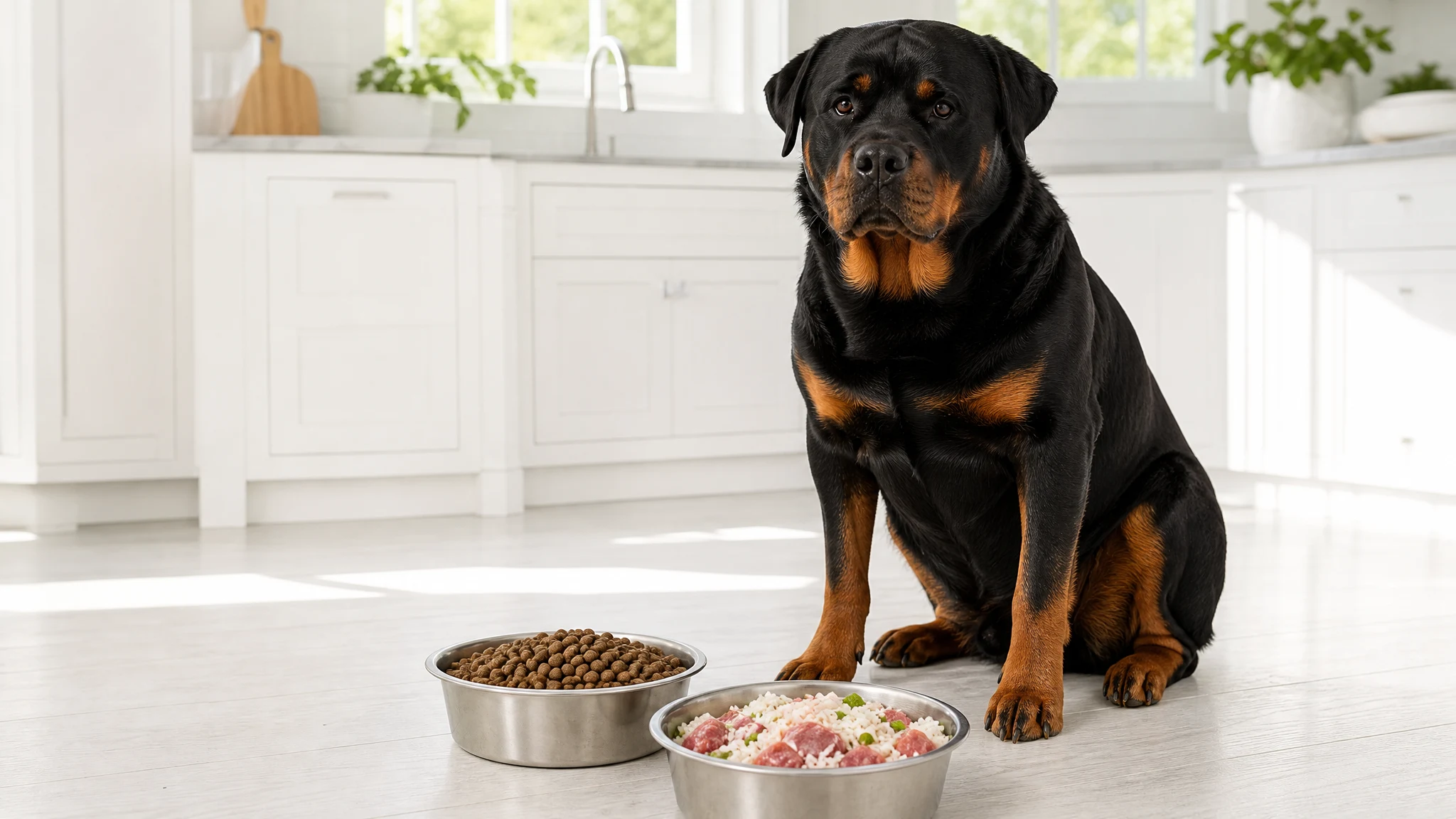
Rottweiler Feeding Guides
Start with the life stage your dog is in, then read the label like a skeptic.
Best foods
Foods compared by label data: AAFCO statement, protein, fat and calories.
Feeding
How much and how often to feed, by age and weight.
Nutrition and health
The diet questions that matter for this breed.
- Best Natural Food for Rottweilers: What 'Natural' Actually Means on the Label
- Best Fresh Food for Rottweilers: What to Check Before Switching
- Best Dog Food Brands for Rottweilers: What Separates Quality Ingredients From Filler
- How to Read Dog Food Nutrition Labels: A Step-by-Step Guide
- Best Food for Rottweiler Puppies: Growth and Nutrition Needs
Foods for Rottweilers, compared by label
Protein and fat as each brand publishes them: guaranteed minimums from the label (as fed), or the dry-matter averages some brands publish instead, marked as such. We compare labels; we do not run feeding trials. Your veterinarian should choose the food for a dog with a health condition.
| Food | Form | Life stage | Protein / fat | Calories |
|---|---|---|---|---|
| Royal Canin Breed Health Nutrition Rottweiler Adult Dry Dog Food | dry | adult (purebred Rottweilers 18 months and older) | 24.0% / 18.0% | 366 kcal ME per cup (as fed, calculated) |
| Royal Canin Breed Health Nutrition Rottweiler Puppy Dry Dog Food | dry | puppy/growth (8 weeks to 18 months) | 29.0% / 14.0% | 358 kcal ME per cup (as fed, calculated) |
| Hill's Science Diet Adult Large Breed No Corn, Wheat, Soy Chicken & Brown Rice Recipe Dog Food | dry | adult maintenance (large breed 1-5 years, 55-110 lb ideal weight; giant breeds 1-4 years, 110+ lb) | not published | 390 kcal per cup |
| Hill's Science Diet Puppy Large Breed Chicken & Brown Rice Recipe Dog Food | dry | large breed puppy (over 55 lb as adult) up to 18 months | not published | 387 kcal per cup (3591 kcal/kg) |
| Hill's Science Diet Adult 6+ Large Breed Chicken Meal, Barley & Rice Recipe Dog Food | dry | mature adult (large breed 6+ years, 55-110 lb; giant breeds 5+ years) | not published | 352 kcal per cup (3550 kcal/kg) |
| Hill's Science Diet Adult Chicken & Barley Entree Wet Dog Food (Chicken, Beef Entree Variety Pack, 13 oz cans) | wet | adult 1-6 years (not for puppies, pregnant or nursing dogs) | not published | 368 kcal per 13 oz can (996 kcal/kg); per can, not per cup |
| VICTOR Classic Hi-Pro Plus Large Breed Puppy | dry | all life stages (large breed puppy growth) | 30% / 14.0% | 365 kcal per cup |
| VICTOR Classic Elite Canine | dry | all life stages (page lists breed size as Large Breed) | 25.0% / 14.0% | 386 kcal per cup (3634 kcal/kg) |
| Freshpet Vital Chicken Recipe with Peas, Carrots & Brown Rice (roll) | fresh | all life stages, including growth of large dogs (70+ lb as adults) | 9.5% / 7% | unknown per cup; 1,363 kcal/kg (calculated), 309 kcal per 1/2 lb |
| Freshpet Chunky Chicken & Turkey Dog Food Roll with Carrots & Brown Rice | fresh | adult maintenance | 11% / 6.5% | unknown per cup; 1,339 kcal/kg (calculated), 304 kcal per 1/2 lb |
| JustFoodForDogs Beef & Russet Potato (fresh frozen, 18 oz, 14-pack) | fresh | adult maintenance (page says not intended for growing puppies) | 8.5% / 7.0% | unknown per cup; 1,559 kcal ME/kg, 44 kcal ME/oz, 792 kcal ME per 18 oz |
| Nom Nom Beef Mash | fresh | all life stages, including growth of large-size dogs (70 lb or more as adults) | 8% / 5% | 201 kcal per cup (calculated) |
What matters when feeding Rottweilers
Breed facts that change what and how much to feed, with sources.
| Adult weight | 80 to 135 pounds (males are usually heavier than females) source |
| Size | large source |
| Life expectancy | 9 to 10 years source |
| Switch to adult food | 12 to 18 months of age source |
| Diet-related health topics | Joint development problem, commonly hips and elbows in Rottweilers; lean body condition supports joint health | Reduced activity with age may lead to extra weight; measure daily portions with a kitchen scale | Listed as a severe inherited heart disease the American Rottweiler Club is working to eradicate source |
Rottweiler Food Questions Answered
What should I look for on a Rottweiler food label?
Find the AAFCO statement first. It tells you whether the food is complete and balanced for growth, adult maintenance or all life stages. Then check the first ingredients, calories per cup and the feeding guide. Your veterinarian can say what suits your individual dog.
Do Rottweiler puppies need a special food?
Hill's Pet Nutrition says Rottweiler puppies benefit from a large-breed puppy formula, designed for controlled bone and joint growth. Look for a growth or all life stages statement that mentions large dogs, and ask your veterinarian which one fits.
When is a Rottweiler considered an adult?
Hill's Pet Nutrition says Rottweilers reach adulthood at 12 to 18 months. Royal Canin's Rottweiler Puppy page says to switch to its adult formula after 18 months. Ask your veterinarian when to change foods for your own dog.
Can food protect my Rottweiler's joints?
No food can promise that. Hill's Pet Nutrition notes hip and elbow dysplasia are common in the breed and that a lean body condition supports joint health. Keeping weight in check matters, so measure portions and ask your veterinarian.
How much should I feed my Rottweiler?
Treat the bag's feeding guide as a starting point. Royal Canin's Rottweiler Adult page, for example, lists 4 cups a day for an 88 lb dog at low activity. Weigh portions on a kitchen scale and adjust with your veterinarian.
How we compare foods
We read each food's published label: the AAFCO nutritional adequacy statement, the guaranteed analysis, the calorie statement and the ingredient list, from the brand's own page. We note which life stage each food is formulated for and whether it covers large-breed growth. We do not test foods on dogs, accept payment from brands or earn commission on these foods. More on our method.
General nutrition information compiled from product labels and published sources, not veterinary advice. Your veterinarian is the right person to choose a diet for your dog, especially one with a health condition.