Slow Feeding Bowls for Rottweilers: Do They Help?
General nutrition information compiled from product labels and published sources, not veterinary advice. Your veterinarian is the right person to choose a diet for your dog, especially one with a health condition.
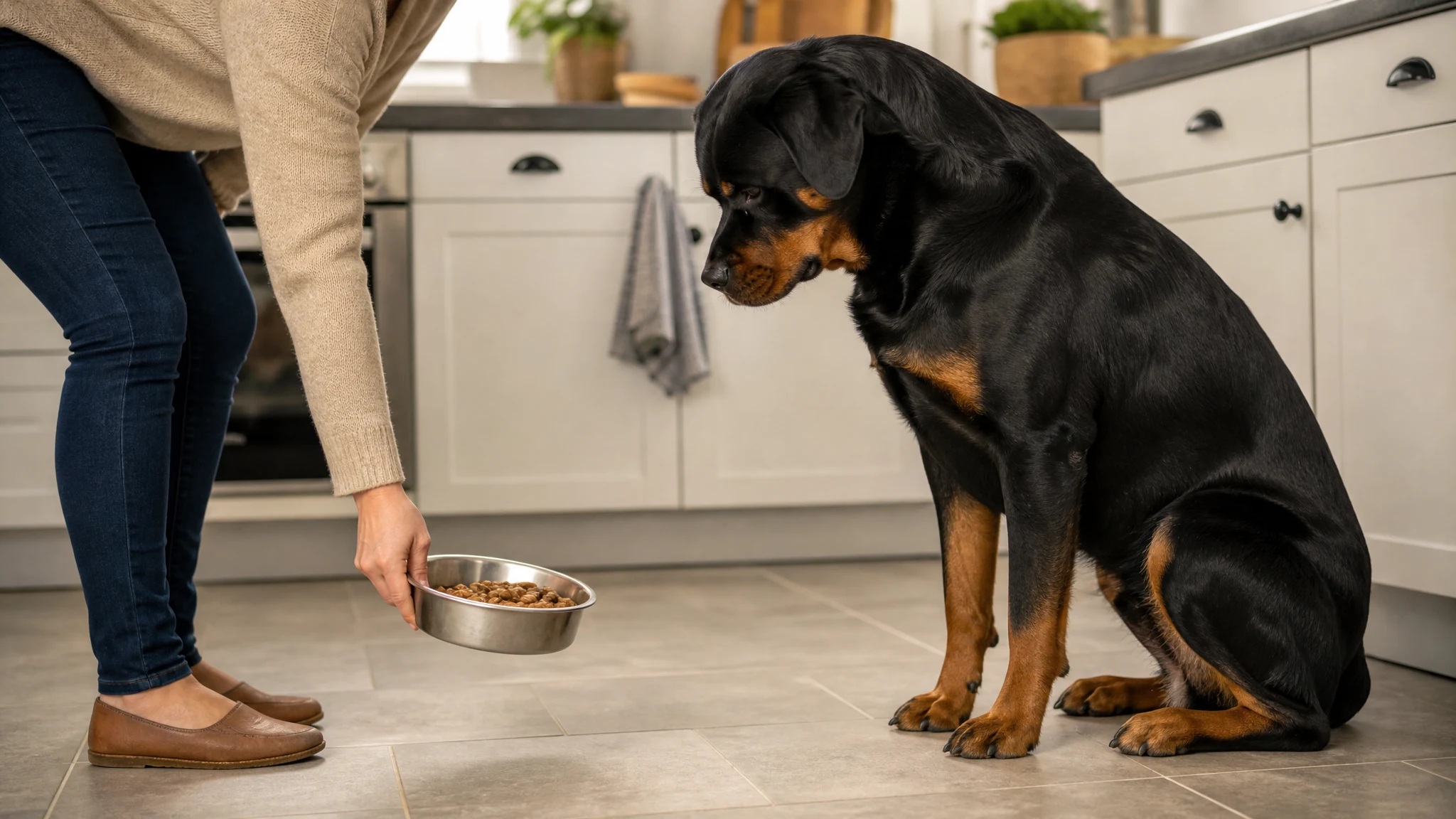
Many Rottweilers eat fast. A big dog can empty a full bowl in under a minute. A slow feeding dog bowl, with ridges, mazes or raised obstacles, is meant to stretch that out.
This guide explains what a slow bowl may and may not do for a Rottweiler. It also shows how to introduce one, step by step. We did not test any bowls or feed any dogs for this page. What follows rests on label data, a breed nutrition source and plain common sense.
Do slow feeding bowls actually help?
Short answer: they may help with pace, and pace is about all they claim to change. A slow feeding dog bowl makes a dog work around obstacles. That can mean smaller mouthfuls and a longer meal.
What we could not find in the breed sources we relied on is any statement that a slow bowl prevents or treats a health problem. Bloat, digestive upset and joint disease are all questions for a veterinarian. If your Rottweiler has had stomach trouble, or you worry about bloat, ask your vet before you change how the dog eats.
One thing the Hill's Pet Nutrition Rottweiler breed page does stress is weight. It says reduced activity with age may lead to extra weight, and that a lean body condition supports joint health. It also notes hip and elbow dysplasia as common joint concerns in the breed. A slow bowl does nothing for those on its own. Measured portions do far more, and the bowl is just a tool for serving them.
What you need
- A slow feeding dog bowl sized for a large breed. Rottweilers weigh roughly 80 to 135 pounds as adults, according to the Hill's breed page, so a tiny maze made for a small dog will not fit a Rottweiler's muzzle.
- A kitchen scale. Hill's recommends measuring daily portions with one.
- A measuring cup, if your food label gives amounts in cups.
- Your dog's current food, ideally the one you already feed.
- A non-slip mat or towel under the bowl.
- Your feeding guide from the food label, and the Rottweiler feeding chart by age on this site for the bigger picture.
Step-by-step: introducing a slow bowl
Step 1: Check the bowl first
Look for a smooth, sturdy bowl with no sharp edges or thin parts that could crack. Rottweilers are strong, and a bowl that gets chewed or shoved around is a problem. Choose a design with wide, shallow channels rather than tight, deep ones. A frustrated dog may paw at the bowl, flip it or give up.
Step 2: Work out the day's food
Start from the label of the food you feed. Treat every label amount as a starting point, not a rule. Some examples of what brands print:
- Royal Canin Breed Health Nutrition Rottweiler Adult lists a daily table by weight and activity. Its guide shows 4 cups (369 g) for an 88 pound dog at low activity, with 1 cup equal to 94 g and 366 kcal per cup.
- Hill's Science Diet Adult Large Breed No Corn, Wheat, Soy Chicken & Brown Rice Recipe lists 5 cups a day for a 100 pound dog, at 390 kcal per cup, and says to adjust to maintain optimal weight.
- For puppies, the Royal Canin Rottweiler Puppy page gives 3 cups (293 g) a day at 2 months for a dog headed for an 88 pound adult weight. Hill's Science Diet Puppy Large Breed tells owners to adjust amounts to maintain optimal weight and to ask a veterinarian if unsure.
Cup sizes differ between foods, so these numbers cannot be swapped between brands. Weigh the food in grams where the label allows it. Hill's breed page says Rottweilers are considered adults at 12 to 18 months, so puppy and adult amounts change around then. Our feeding chart covers age-by-age planning.
Step 3: Divide the day into meals
Split the daily total into the number of meals your vet suggests. Puppies usually eat more often than adults. Weigh each portion before it goes in the bowl, rather than eyeballing it. The bowl does not change how much food your dog needs.
Step 4: Do a dry run
For the first meal, put the food in the slow bowl and stay close. Some dogs take to it at once. Others stare at it. If yours seems confused, spread the kibble loosely over the ridges so it is easy to reach. You can make it harder over several days.
Step 5: Reward calm behavior
Keep this positive. Praise your dog quietly while they work out the bowl. If they get frustrated, take a break, then try again at the next meal. Never punish a dog for struggling with a feeder. Reward-based handling, which is the approach the American Veterinary Society of Animal Behavior supports, applies at the food bowl too.
Step 6: Watch the first week
Note how long meals take, whether your dog finishes, and whether stools or appetite change. Write it down. If anything looks off, such as vomiting, a swollen belly or repeated retching, call your veterinarian right away rather than waiting.
Wet and fresh food in a slow bowl
Not every Rottweiler eats kibble. Some owners feed canned or fresh food. Wet food can be pressed into the ridges of many slow bowls, which turns the meal into a lick-and-scoop task. Check the label for amounts, since these foods differ a lot in calories.
For instance, the Hill's Science Diet Adult Chicken & Barley Entree is listed at 368 kcal per 13 ounce can, and its chart ranges up to 6 cans a day for a 120 pound dog. Freshpet and Nom Nom list amounts in pounds or by their own feeding guide. Follow the brand's directions and ask your vet about any mixing of food types.
Tips for better results
- Match the bowl to the muzzle. A Rottweiler's broad head needs room. If the dog cannot reach the food, the bowl is too small or too hard.
- Keep the water bowl separate. Offer fresh water as usual.
- Clean it daily. Ridges trap food residue. Wash it with soap and hot water, and dry it well.
- Rotate challenge levels. If your dog masters the bowl, move to a slightly more complex pattern instead of a much harder one.
- Feed in a calm spot. Quiet surroundings help a dog settle. If you have more than one pet, feed them apart.
- Replace it when worn. Chewed or cracked plastic is a hazard.
Common mistakes to avoid
- Treating the bowl as a diet plan. A slow bowl does not reduce calories. Overfeeding still leads to weight gain, and Hill's notes that Rottweilers may gain weight as activity falls with age.
- Buying a bowl that is too hard. Deep mazes can frustrate a big dog. Start easy.
- Skipping the scale. Scooping by eye often adds up to extra food over a month.
- Assuming the bowl solves a medical problem. If your dog gulps food, vomits after meals or seems uncomfortable, see a vet. A bowl is not a diagnosis or a treatment.
- Switching foods and bowls on the same day. Change one thing at a time so you can tell what caused any change in your dog.
- Leaving a puppy alone with a hard plastic bowl. Puppies chew. Supervise early meals.
What results to expect
Many owners find that a slow feeding dog bowl lengthens mealtime and slows the gulping. That is a reasonable thing to expect, though results vary from dog to dog. Some Rottweilers adapt in a few meals. Others never warm to it.
A slower meal may feel calmer to some dogs. It may also give you a better chance to notice appetite changes. We cannot promise it will change digestion, weight or joint health, and we found no breed source that says it does. Body condition comes mainly from the amount fed and the exercise your dog gets.
When to talk to your vet
Confirm amounts and meal timing with your veterinarian if your Rottweiler has a health condition, is a growing puppy, is a senior, or is overweight. Prescription diets are something only a veterinarian prescribes. If your vet suggests a specific way of feeding, follow that over general advice here.
Bottom line
A slow bowl is a low-cost tool that may slow down a fast eater. It works best alongside weighed portions, a food suited to your dog's age, and regular vet checkups. Pick a large, sturdy design, introduce it gradually, and watch how your dog responds.
Sources
- Hill's Pet Nutrition, Rottweiler breed page
- Royal Canin, Breed Health Nutrition Rottweiler Adult
- Royal Canin, Breed Health Nutrition Rottweiler Puppy
- Hill's Science Diet, Adult Large Breed No Corn, Wheat, Soy Chicken & Brown Rice
- Hill's Science Diet, Puppy Large Breed Chicken & Brown Rice
- Hill's Science Diet, Adult Chicken & Barley Entree wet food