Best Feeding Station Setups for a Rottweiler
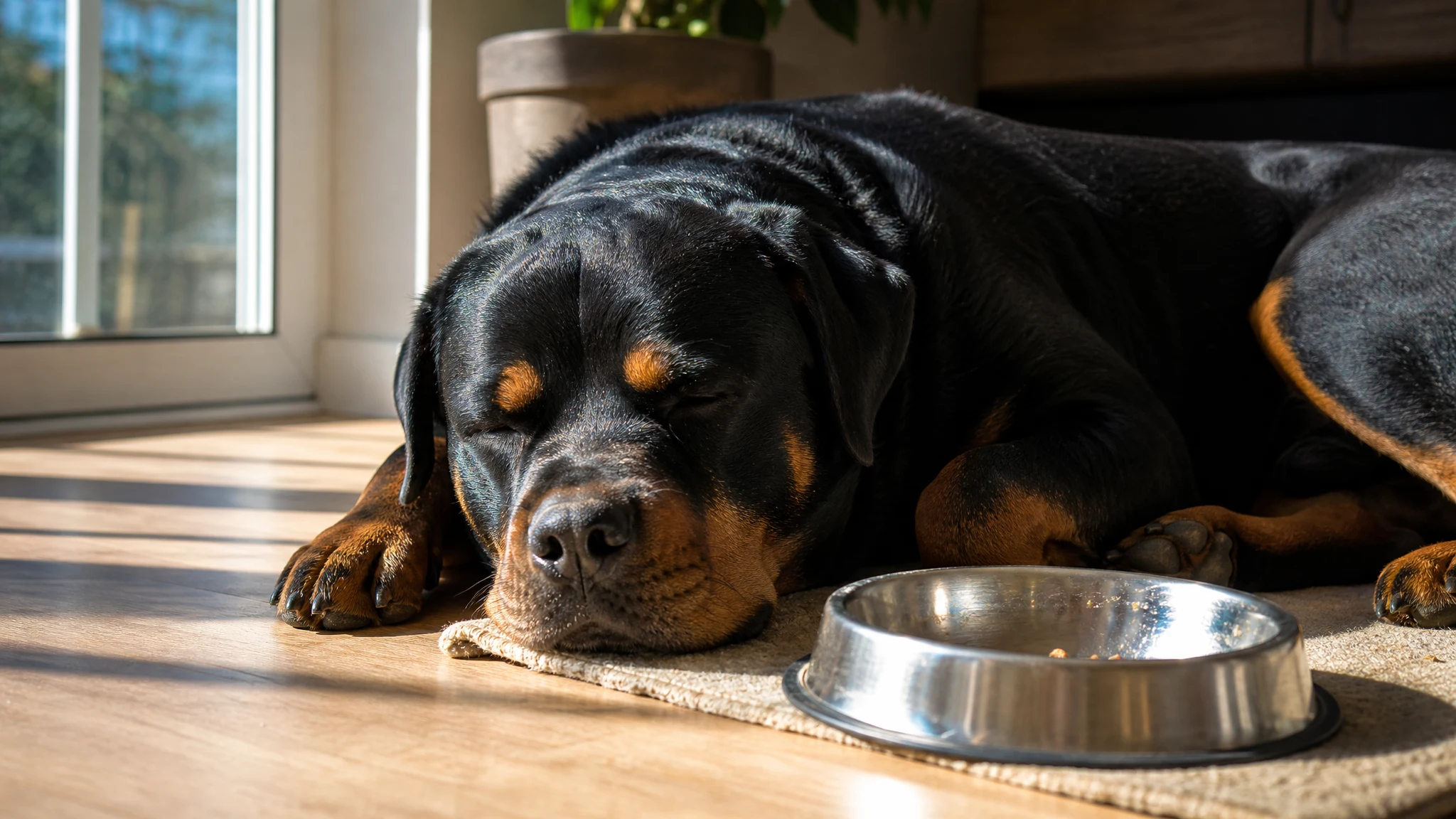
General nutrition information compiled from product labels and published sources, not veterinary advice. Your veterinarian is the right person to choose a diet for your dog, especially one with a health condition.
A good dog feeding station is not fancy. It is a steady spot, the right bowls, a way to measure food, and a routine you can repeat every day. For a large dog like a Rottweiler, those basics matter more than any gadget.
Hill's Pet Nutrition lists adult Rottweilers at roughly 80 to 135 pounds, with males usually heavier than females. That is a lot of dog at a bowl. This guide walks through building a station that suits that size, keeps portions accurate, and makes mealtime calm.
What You Need
- A non-slip mat. Rubber or silicone, big enough to catch spilled kibble and water.
- A food bowl and a water bowl. Wide, heavy and stable. Stainless steel or ceramic are easy to wash.
- A kitchen scale. Hill's suggests measuring daily portions with a kitchen scale, especially as activity drops with age.
- A measuring cup. Useful as a backup, but cups vary in how they are filled.
- An airtight food container. Large enough for the bag you buy, kept in a cool, dry spot.
- A notebook or phone note. For the daily amount, meal times and body condition checks.
Step 1: Pick the Spot
Choose a quiet corner of the kitchen or utility room. Avoid doorways and the busiest walkway. A dog that eats while people step around the bowl may gulp or guard.
Use a hard floor you can wipe down, or put the mat over carpet. Keep the station away from the trash and the dishwasher door, which swings open at head height.
If you have other pets or small children, set the station where a Rottweiler can eat without being approached. Teach children that the dog is left alone at meals. This is a safety habit, not a punishment.
Step 2: Lay Down the Mat
A large dog pushes bowls around. A mat with a raised edge or a rubber grip keeps the bowls from sliding across the floor and keeps water off the boards.
Pick a mat wide enough that both bowls sit on it with room to spare. Wash it weekly with warm soapy water.
Step 3: Choose Bowls That Fit a Large Dog
Look for a wide, low-slung bowl with a weighted or non-slip base. A bowl that tips easily turns into a game, and a bowl that is too small lets kibble scatter.
Stainless steel and ceramic are simple to clean and do not hold smells the way scratched plastic can. Check for chips or deep scratches and replace any bowl that has them.
About raised stands
Many owners wonder whether a raised stand is better for a big dog. The breed source we rely on does not address bowl height, so there is no label or breed guidance to point to here. If you are considering a raised stand, ask your veterinarian whether it makes sense for your individual dog. Choose a sturdy one that does not wobble.
Step 4: Set Up Fresh Water
Place the water bowl beside the food bowl, on the mat, and refill it every day. Wash it often. Rottweilers are big drinkers after exercise, so a larger or second water bowl in another room can help.
Step 5: Weigh the Food
This is where a feeding station earns its keep. Weigh each meal in grams on the kitchen scale instead of scooping by eye. Scoops can vary a lot from one filling to the next.
Royal Canin's product page gives a useful example of why this helps. It states that one cup of its Rottweiler Adult dry food equals 94 grams. Its feeding table shows an 88 pound dog at low activity getting 4 cups, which is 369 grams a day. Treat that as a starting point from the brand, not a rule for your dog.
Hill's Science Diet Adult Large Breed lists 5 cups a day for a 100 pound dog on its product page, and says to adjust the amount to maintain optimal weight. Two foods, two different cup sizes and calorie levels. Always follow the label of the food you actually buy.
For a deeper look at amounts by age, see our guide to the Rottweiler feeding chart by age.
Step 6: Set a Meal Schedule
Rottweilers are considered adults at about 12 to 18 months, according to Hill's. Until then they are growing, and their food and portions change.
- Puppies: Hill's says Rottweiler puppies benefit from a large-breed puppy formula, with controlled bone and joint growth. Royal Canin's puppy page shows 3 cups (293 g) a day at 2 months for a dog with a target adult weight of 88 pounds, and says to switch to its adult formula after 18 months. Ask your veterinarian how many meals a day suit your puppy.
- Adults: Many owners split the daily amount into two meals. Pick set times, such as morning and evening, and keep them steady.
- Seniors: Hill's notes that reduced activity with age may lead to extra weight. Your portions may need to shift, so re-check them with your veterinarian.
Pick up the bowl after about 15 to 20 minutes. Leaving food out all day makes it hard to know how much your dog really eats.
Step 7: Store the Food Properly
Keep the bag in a cool, dry place, and follow the storage notes on the label. Many owners pour the kibble into an airtight container and keep the bag, with its lot number and best-by date, tucked inside or taped to the lid. If a food is ever recalled, you will want that information.
Fresh and refrigerated foods have their own storage rules. Freshpet, JustFoodForDogs and Nom Nom all post feeding details on their own pages, so read the brand's directions. Wash any scoop or bowl after each meal with these foods.
Step 8: Add a Calm Routine
Ask your dog to sit before you lower the bowl. Use a calm cue and praise or a quiet "yes" when they do. This fits reward-based training, which the American Veterinary Society of Animal Behavior (AVSAB) supports. It builds manners without force or confrontation.
Do not take food away to "prove a point." Do not reach in and grab the bowl mid-meal. If your dog stiffens, freezes or growls over food, contact a qualified reward-based trainer or your veterinarian for help.
Tips for Different Foods
| Food type | Station tip | Label detail to check |
|---|---|---|
| Dry (Royal Canin, Hill's Science Diet, VICTOR) | Weigh in grams, store in an airtight bin | Kcal per cup and the daily feeding table |
| Wet (Hill's Science Diet canned) | Use a can opener and lid for leftovers; wash bowl after each meal | Amounts are given per can, not per cup |
| Fresh (Freshpet, JustFoodForDogs, Nom Nom) | Keep a clean cutting board and knife for portions | Life stage statement and the brand's feeding calculator |
Not every product suits every life stage. For example, the JustFoodForDogs Beef & Russet Potato page says it is not intended for growing puppies. Check the AAFCO statement on any food before you build your routine around it.
Common Mistakes to Avoid
- Scooping by eye. Cups differ between brands, and a heaping scoop can add up over weeks.
- Ignoring treats. Treats count toward the day's food. Subtract them when you plan the meal.
- Switching foods suddenly. Mix a little of the new food into the old over several days, and ask your veterinarian for the pace that suits your dog.
- Using an adult food for a puppy. Check that the label states it is made for growth, and for a large-breed puppy, look for large-size growth wording.
- Feeding right before hard exercise. Keep mealtimes calm, and ask your veterinarian about timing around activity.
- Skipping body checks. A scale and a notebook only help if you look at your dog. Check ribs and waistline regularly.
Expected Results
With a steady setup, many owners find mealtimes become calmer and tidier. Weighed portions may make it easier to notice when your dog is gaining or losing weight. Hill's says a lean body condition supports joint health in Rottweilers, a breed it lists as commonly affected by hip and elbow dysplasia, so keeping an eye on weight is a reasonable habit.
A feeding station does not prevent or treat any condition. Results vary from dog to dog.
When to Check With Your Veterinarian
Every amount in this article is a label starting point. If your Rottweiler has a health condition, is a growing puppy, is a senior, or is losing or gaining weight, confirm the amount and food with your veterinarian. Only a veterinarian can prescribe a therapeutic diet or decide what is right for an individual dog.
Do not add supplements to the bowl without asking your veterinarian first.
A Quick Setup Checklist
- Pick a quiet, wipeable spot.
- Lay down a non-slip mat.
- Set out a heavy food bowl and a water bowl.
- Weigh the daily food on a kitchen scale.
- Feed at set times and pick up the bowl afterward.
- Store the food airtight, with the lot number saved.
- Log weight checks, and revisit amounts with your veterinarian.