Human Foods Rottweilers Should Never Eat
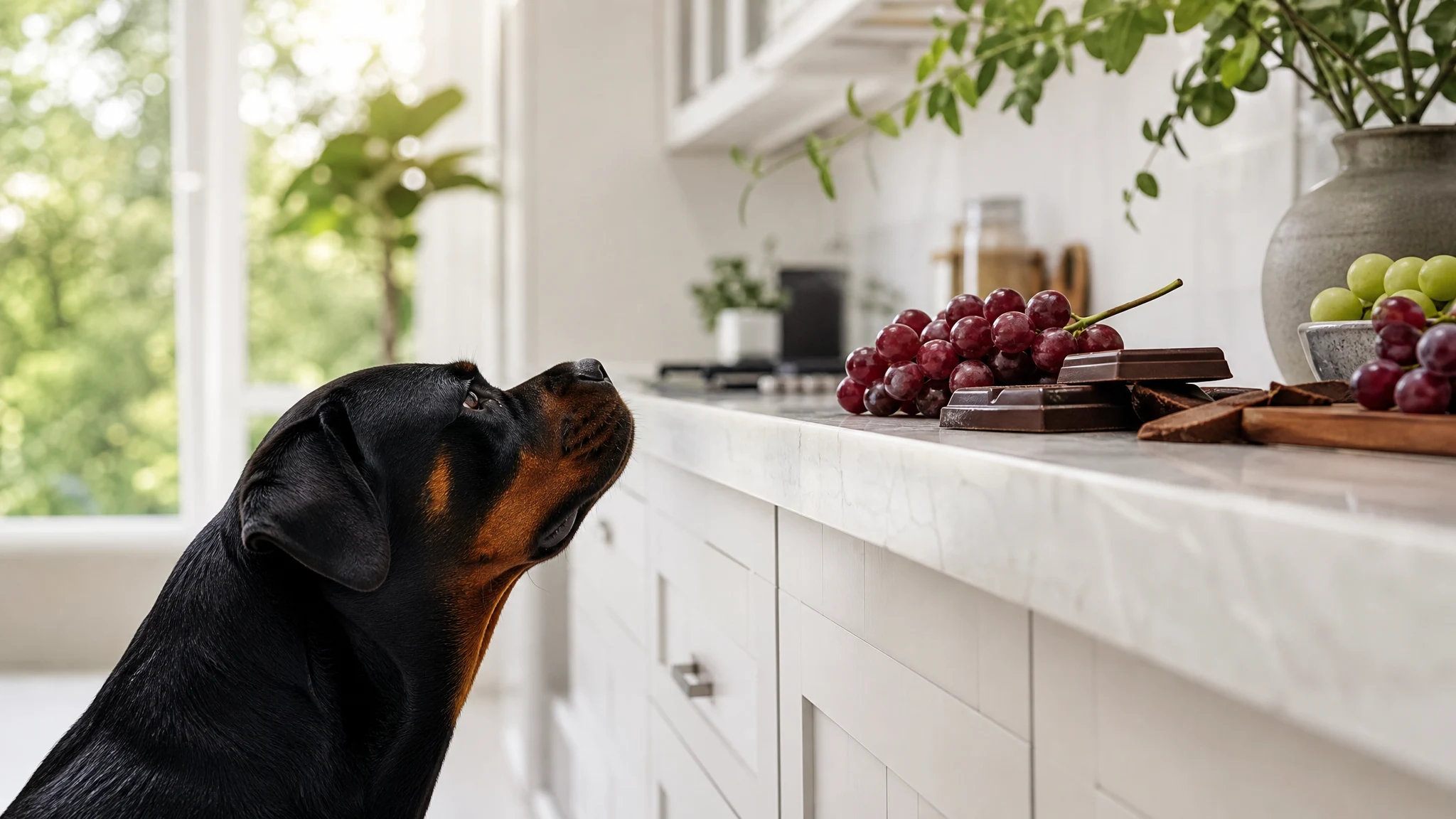
General nutrition information compiled from product labels and published sources, not veterinary advice. Your veterinarian is the right person to choose a diet for your dog, especially one with a health condition.
Rottweilers are large dogs, usually 80 to 135 pounds according to Hill's Pet Nutrition. That does not make them immune to household foods that poison dogs. This page answers common questions about what Rottweilers cannot eat, which snacks are usually fine, and what to do if your dog gets into something.
The toxic foods below follow the ASPCA Animal Poison Control Center's lists of people foods to avoid. This page gives no doses or safe amounts for any toxic food, because no amount is a safe starting point. Your veterinarian decides what is right for your individual dog.
The Basics
What can Rottweilers not eat?
The ASPCA's lists of toxic people foods include chocolate, grapes and raisins, xylitol, onions and garlic, macadamia nuts, and alcohol. Other risks include caffeine, raw yeast dough, and cooked bones. The sections below explain why each one matters.
Does a big dog like a Rottweiler get a pass on small bites?
No. Size can change how fast a problem shows up, but it does not make a toxic food safe. Some foods, such as grapes and raisins, can harm dogs in ways that are hard to predict, so treat every item on the toxic list as off limits.
Can Rottweilers eat table scraps?
It is best not to make a habit of it. Scraps often carry onion, garlic, salt, fat, or seasoning that you cannot see. They also add calories, and Hill's notes that Rottweilers can gain weight as activity drops with age.
Chocolate, Sweeteners and Baked Goods
Can Rottweilers eat chocolate?
No. The ASPCA lists chocolate as toxic to dogs, and darker, more bitter chocolate is generally considered riskier. If your Rottweiler eats any, call a veterinarian or poison control instead of waiting to see what happens.
Why is xylitol such a concern?
Xylitol is a sugar substitute that the ASPCA lists as dangerous for dogs. It turns up in sugar-free gum, some candies, and baked goods. Some peanut butters and other pantry items contain it too, so read the ingredient list before sharing anything.
Is raw bread dough a problem?
Yes. The ASPCA warns against letting dogs eat raw yeast dough. It can expand in the stomach and cause serious trouble. Keep rising dough well out of reach, including on counters.
Are cakes, cookies and other sweets okay as a treat?
Not as a rule. Sweets may contain chocolate, xylitol, raisins, or nuts, and they offer your dog little nutrition. A plain dog treat is a safer choice.
Fruits and Vegetables
Can Rottweilers eat grapes or raisins?
No. The ASPCA lists grapes and raisins as toxic to dogs. This includes foods that contain them, such as trail mix, cereal, and baked goods.
Can Rottweilers eat onions and garlic?
No. The ASPCA lists onions and garlic, and the same family of plants including chives and leeks, as harmful to dogs. This applies to cooked, raw, and powdered forms. Many soups, sauces, and seasoning blends contain them.
Is avocado safe?
The ASPCA advises caution with avocado and says to avoid giving it to dogs. The large pit is also a choking and blockage hazard. Skipping it is the simplest approach.
Are fruit pits and corn cobs a concern?
They can be. Pits and cobs may lodge in the digestive tract of even a large dog. Some pits also contain harmful compounds, so ask your veterinarian before sharing any fruit.
Nuts, Fat, Bones and Dairy
Can Rottweilers eat macadamia nuts?
No. The ASPCA lists macadamia nuts as toxic to dogs. Cookies and snack mixes that contain them are also off limits.
Is fatty food or meat trimming safe?
Rich, greasy food can upset a dog's stomach and may lead to more serious illness. A large dog can eat a lot of trimmings quickly. Keep fried food, bacon grease, and fat trimmings out of the bowl.
Can Rottweilers have cooked bones?
It is safer to avoid them. Cooked bones can splinter, and any bone can crack a tooth or cause a blockage. Ask your veterinarian about chew options that suit your dog.
Can Rottweilers eat dairy?
Some dogs digest dairy poorly and get loose stools or gas. It is not on the ASPCA's list of top poisons, but it is not necessary either. If you want to try a small taste, check with your veterinarian first.
Drinks and Seasonings
Can Rottweilers have alcohol?
No. The ASPCA lists alcohol as dangerous for dogs. This includes beer, wine, spirits, and food made with alcohol. Do not leave open glasses within reach.
What about coffee, tea and caffeine?
Avoid them. The ASPCA lists caffeine as harmful to dogs, including coffee grounds, tea bags, and energy products. Keep these in cupboards or on high surfaces.
Is salty food a problem?
It can be. The ASPCA warns about salty snacks, and too much salt is hard on dogs. Chips, pretzels, and cured meats are poor treats for any dog.
Safer Snacks and Treat Habits
Can Rottweilers eat plain vegetables like carrots?
Plain carrot pieces are a commonly used low-calorie snack, but confirm with your veterinarian that they suit your dog. Skip salt, butter, oil, and seasoning. Cut pieces small enough to avoid choking.
How should treats fit into the daily diet?
Count them as part of the day's food, not on top of it. Hill's recommends measuring portions with a kitchen scale, since Rottweilers can gain weight. A lean body also supports joint health, which matters in a breed prone to hip and elbow dysplasia.
Should a puppy follow different rules?
The toxic foods list stays the same, but puppies are curious and chew everything. Hill's advises a large-breed puppy formula for Rottweilers, so ask your veterinarian before adding extras. Our label comparison of foods for Rottweilers covers puppy and adult options, using label data only. We did not run feeding trials or taste tests.
If Your Rottweiler Eats Something Dangerous
What should I do right away?
Call your veterinarian or the ASPCA Animal Poison Control Center straight away. Check the ASPCA website for its current phone number and save it in your phone now. Do not wait for symptoms, because some poisons act slowly.
Should I make my dog vomit?
Only if a veterinarian or poison control professional tells you to. Some substances cause more harm coming back up. Follow their instructions for your dog.
What should I tell the veterinarian?
Share what your dog ate, roughly how much, and when. Note your dog's weight, and bring the package or ingredient label if you have it. If your dog is vomiting, collapsing, or acting strangely, go to an emergency clinic.
Sources
For the current toxic foods lists and the Animal Poison Control phone number, visit the ASPCA website directly.