Best Dog Food for Gut Health: What the Label Should Show
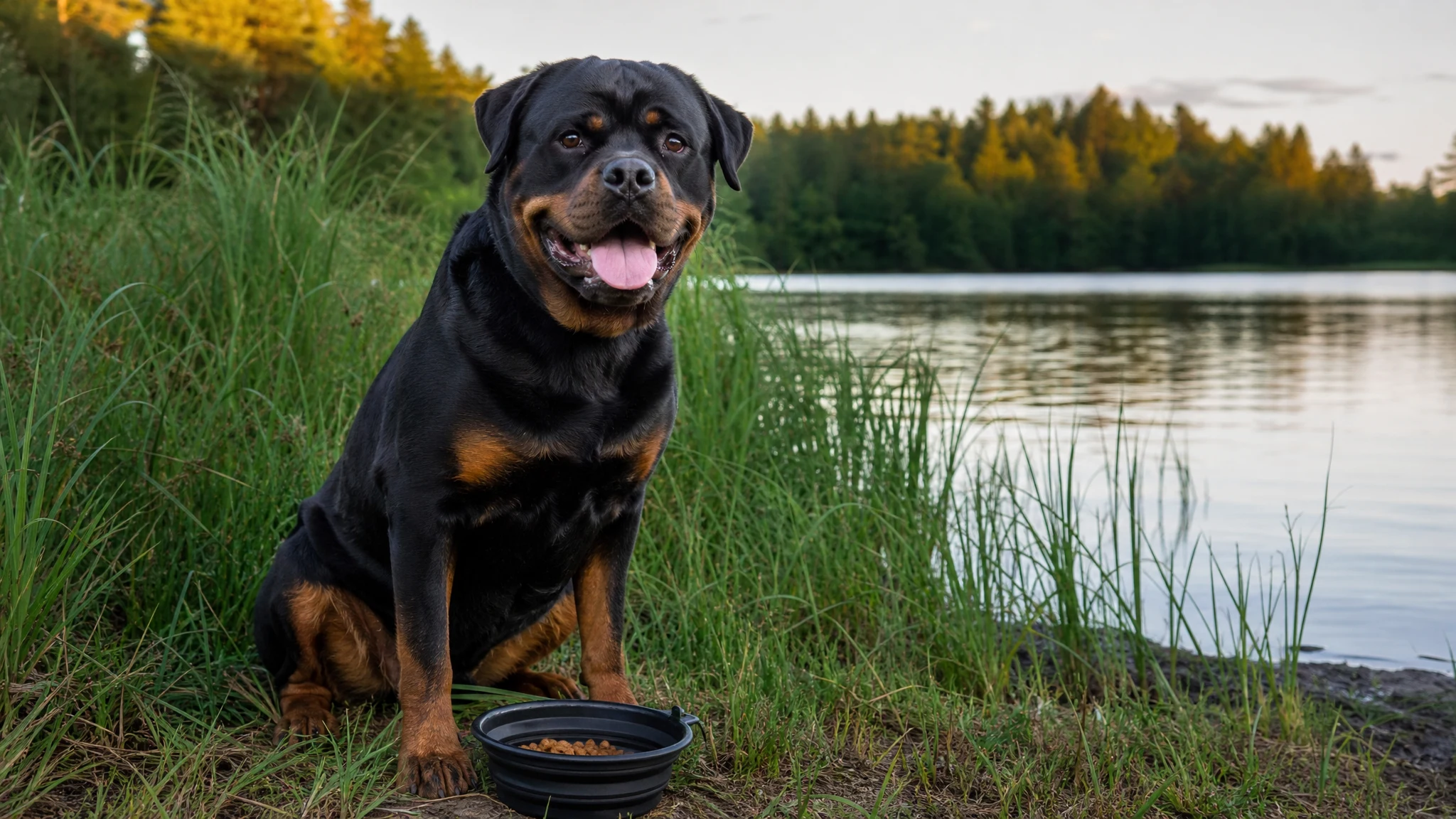
General nutrition information compiled from product labels and published sources, not veterinary advice. Your veterinarian is the right person to choose a diet for your dog, especially one with a health condition.
Shopping for dog food for gut health is mostly a label-reading job. Bags use words like "digestive support" and "sensitive stomach," but those phrases are marketing. The facts that matter sit in the small print.
This guide is written for Rottweiler owners. It shows what to look for, step by step, and how a handful of real foods compare on their published label data. We compared label data only. We did not run feeding trials or taste tests, and nothing here says a food will prevent or treat any condition.
Why a Rottweiler needs a size-aware approach
Hill's Pet Nutrition's Rottweiler breed page lists adult weight at 80 to 135 pounds, with males usually heavier than females. It says Rottweilers are considered adult at 12 to 18 months and gives a life expectancy of 9 to 10 years. That is a large dog, and large dogs eat large volumes. Small differences in a food add up over a bowl that size.
The same page says Rottweiler puppies benefit from a large-breed puppy formula with controlled bone and joint growth. It also notes that reduced activity with age may lead to extra weight, and it suggests measuring daily portions with a kitchen scale. Both points matter for digestion, because overfeeding and sudden food changes are common reasons for upset stomachs. Whether a given dog has a gut problem is a question for your veterinarian.
What you need before you start
- The bag, can or pouch of the food you are considering, or its brand product page.
- Your dog's current weight and age.
- A kitchen scale for portions.
- A notebook or phone note for comparing foods side by side.
- Your veterinarian's input on anything medical, such as ongoing diarrhea, vomiting or weight loss.
Step 1: Find the AAFCO statement and match it to life stage
Look for the sentence that says the food meets the AAFCO Dog Food Nutrient Profiles or passed AAFCO feeding tests. It will name a life stage: maintenance, growth, or all life stages.
Royal Canin's Rottweiler Adult page says the food is formulated to meet AAFCO levels for maintenance. Its Rottweiler Puppy page says the food is formulated for growth, from 8 weeks to 18 months. VICTOR's Classic Hi-Pro Plus Large Breed Puppy lists AAFCO all life stages. Freshpet's Vital Chicken roll lists all life stages, including growth for large dogs that reach 70 pounds or more as adults.
For a Rottweiler puppy, that last wording is the one to find. A statement that only covers adult maintenance does not fit a growing puppy.
Step 2: Read the first five ingredients
Ingredients are listed by weight before cooking, so the first few tell you the base of the food. Write them down for each candidate.
- Royal Canin Rottweiler Adult: chicken by-product meal, chicken fat, brown rice, corn, brewers rice.
- Hill's Science Diet Adult Large Breed Chicken & Brown Rice: chicken, brown rice, brewers rice, cracked pearled barley, chicken meal.
- VICTOR Classic Elite Canine: chicken meal, whole grain brown rice, grain sorghum, peas, chicken fat.
- Freshpet Chunky Chicken & Turkey roll: chicken, turkey, chicken liver, carrots, chicken broth.
An ingredient list cannot tell you how a food will sit in your dog's stomach. It can show you what the food is built from, so you can avoid repeating an ingredient your dog has reacted to before. If a past reaction worries you, ask your veterinarian before changing foods.
Step 3: Check protein, fat and fiber the right way
Gut-focused marketing often leans on fiber. The guaranteed analysis lists a minimum for protein and fat and a maximum for fiber. A fiber maximum is a ceiling, not a promise of how much is in the bag.
Hill's lists "average nutrient content on a dry matter basis," which is not the same as guaranteed minimums. Wet and fresh foods contain a lot of water, so their percentages look small next to dry food. Compare dry food with dry food, and treat the rest as a separate category.
| Food | AAFCO life stage | Protein | Fat | Fiber | Calories |
|---|---|---|---|---|---|
| Royal Canin Rottweiler Adult (dry) | Maintenance | 24.0% min | 18.0% min | 3.9% max | 366 kcal per cup |
| Hill's Science Diet Adult Large Breed (dry) | Adult maintenance | 23.8% avg, dry matter | 16.3% avg, dry matter | 1.6% avg, dry matter | 390 kcal per cup |
| VICTOR Classic Elite Canine (dry) | All life stages | 25.0% min | 14.0% min | 4.0% max | 386 kcal per cup |
| Freshpet Chunky Chicken & Turkey (fresh roll) | Adult maintenance | 11% min | 6.5% min | 1.5% max | 304 kcal per 1/2 lb |
Do not read the Hill's row against the others as if it were a minimum. It is an average on a different basis. The fresh roll is also not directly comparable to the dry foods, because of its water content and its calories listed per half pound.
For a fuller side-by-side of more products, see our Rottweiler foods compared by label data.
Step 4: Look for claims you can verify
A food can only be described by what its label and the brand's page show. None of the product pages we compared state that the food treats or prevents any digestive condition, and you should be wary of any bag that does. Words like "gentle," "digestive" or "gut-friendly" are not defined by AAFCO.
If a brand names a specific ingredient for digestion, such as a fiber source or a live culture, check whether the guaranteed analysis or ingredient list actually shows it. Ask the brand directly if the page is vague. Check kibble size with the brand too, since none of the pages we reviewed gave a clear figure.
Step 5: Match calories to portions
Calories per cup differ by dozens between foods, so the same scoop is not the same meal. Royal Canin lists 366 kcal per cup, and its feeding table starts at 88 pounds. At that weight with low activity, the table gives 4 cups, which is about 369 grams. Hill's lists 390 kcal per cup for its adult large breed food and gives 5 cups a day for a 100 pound dog.
Treat these as starting points printed on the label. Weigh the food, watch your dog's body condition, and adjust with your veterinarian. Hill's own wording is to adjust amounts to maintain optimal weight.
Step 6: Plan the switch
Even a well-matched food can cause trouble if it replaces the old one overnight. Mix a little of the new food into the old, then shift the ratio over several days or longer. Many brands print their own transition guidance, so check the bag or ask the brand for the schedule they recommend.
Change one thing at a time. If you swap food, treats and chews in the same week, you will not know which change caused any problem.
Tips and common mistakes
- Judging by the front of the bag. Slogans are not label data. Turn the bag over.
- Comparing different bases. Dry matter, as-fed, dry and fresh numbers cannot be lined up directly.
- Using an adult food for a puppy. Check that the AAFCO statement covers growth. Royal Canin's puppy page says to switch to the adult formula after 18 months.
- Assuming grain-free means better digestion. The pages we reviewed do not make that case. JustFoodForDogs lists its beef recipe as grain free, but its page also says it is for adult maintenance, not growing puppies.
- Ignoring weight. Extra weight is a risk the Hill's breed page flags for Rottweilers as activity drops with age.
- Treating symptoms at home. Ongoing loose stools, vomiting or appetite loss call for a veterinarian, not a new bag.
- Buying a prescription diet on your own. Prescription diets are something only a veterinarian prescribes.
What results to expect
A food that fits your dog's life stage and is fed in measured portions may help you keep a steady routine. Some owners find that stools stay more consistent once the food and amounts stop changing. That is not a promise, and no label can tell you how an individual dog will respond.
Keep notes on appetite, stool quality and body condition for a few weeks. Bring those notes to your veterinarian, who decides what is right for your dog.
Sources
- Hill's Pet Nutrition, Rottweiler breed page
- Royal Canin, Rottweiler Adult product page
- Royal Canin, Rottweiler Puppy product page
- Hill's Science Diet, Adult Large Breed product page
- VICTOR, Classic Elite Canine product page
- VICTOR, Classic Hi-Pro Plus Large Breed Puppy product page
- Freshpet, Chunky Chicken & Turkey roll product page
- Freshpet, Vital Chicken Recipe product page
- JustFoodForDogs, Beef & Russet Potato product page